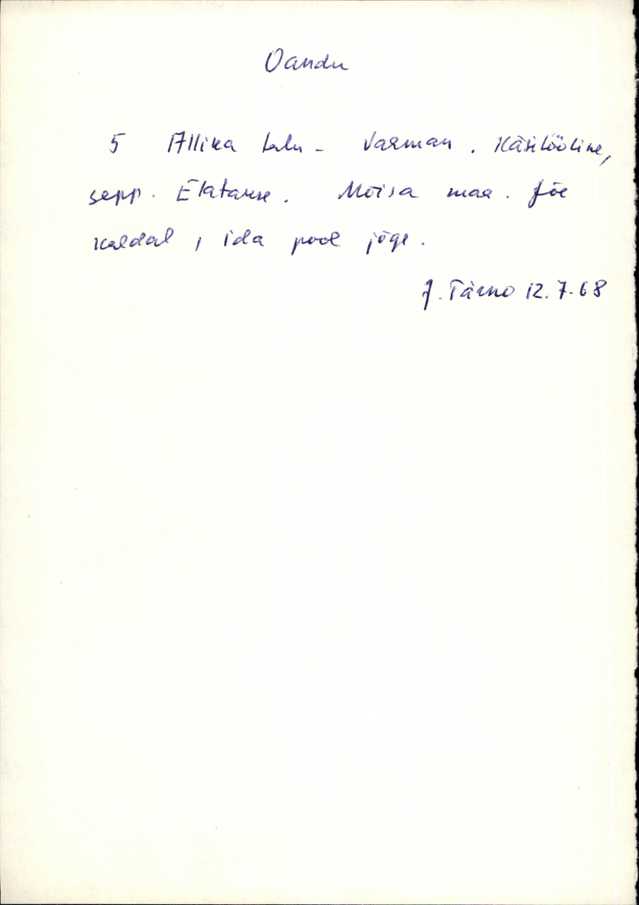
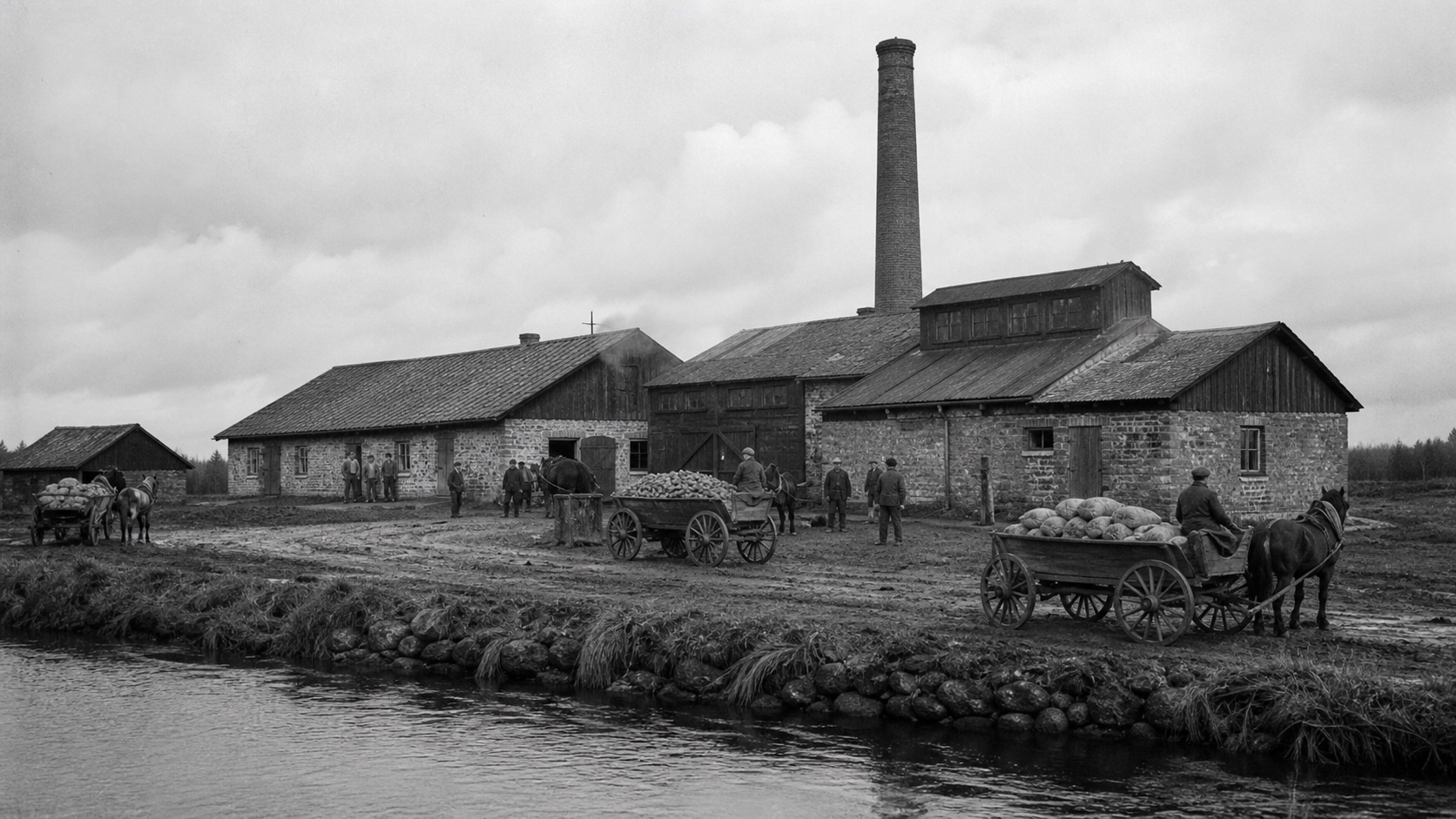
Who lived at Allika, how its names and boundaries changed, and what old photographs reveal. These are the farm’s stories; village life has its own Oandu section.
These are not established history. They show exactly what still needs to be documented.
No continuous document has yet connected Piiritusevabriku A‑11 to the present name Allika.
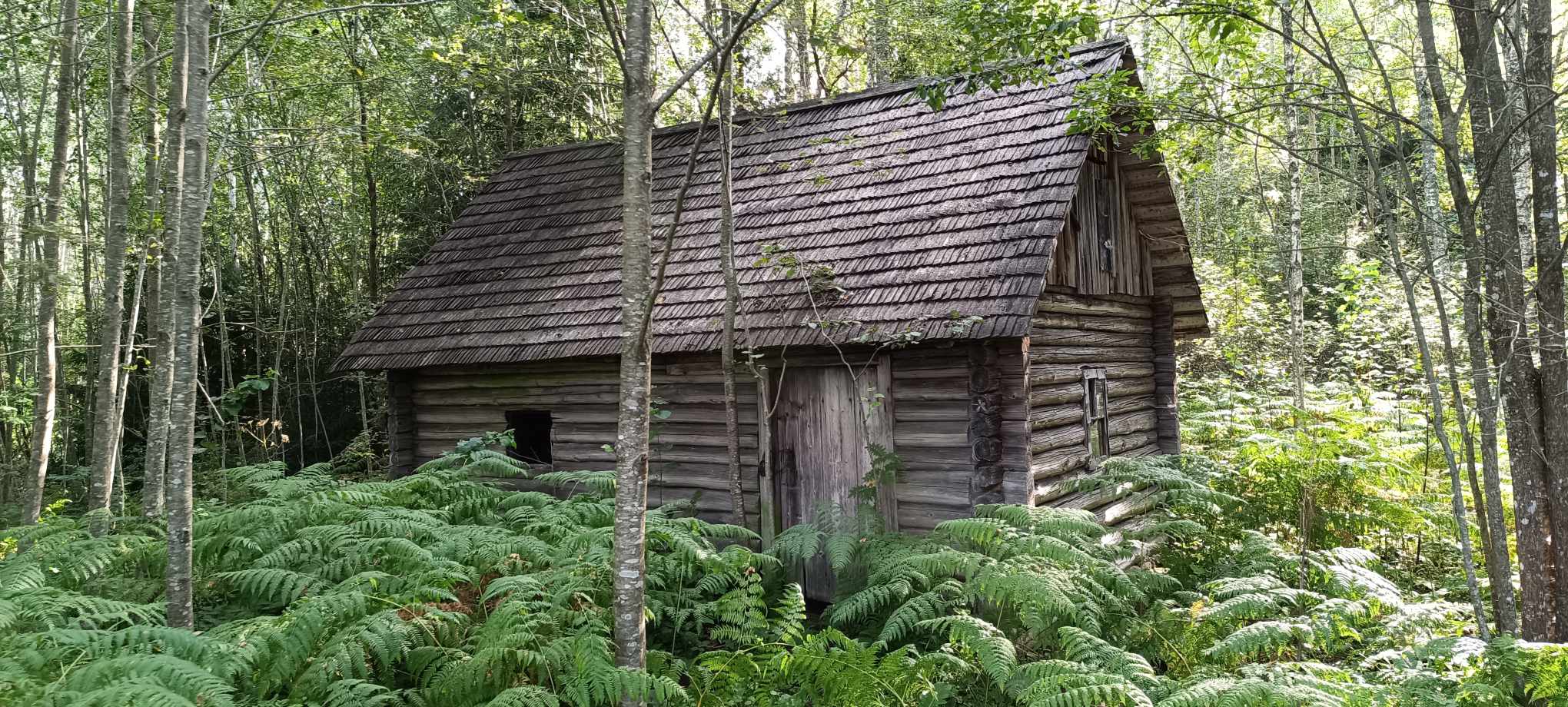
The dates and identity of every surviving structure remain unestablished; EHR dates do not replace a primary construction record.
A continuous historical chain of holders or owners has not been reconstructed.
The shared name with Maidla piiritusevabrik does not establish a connection between the distillery and the present farmyard.
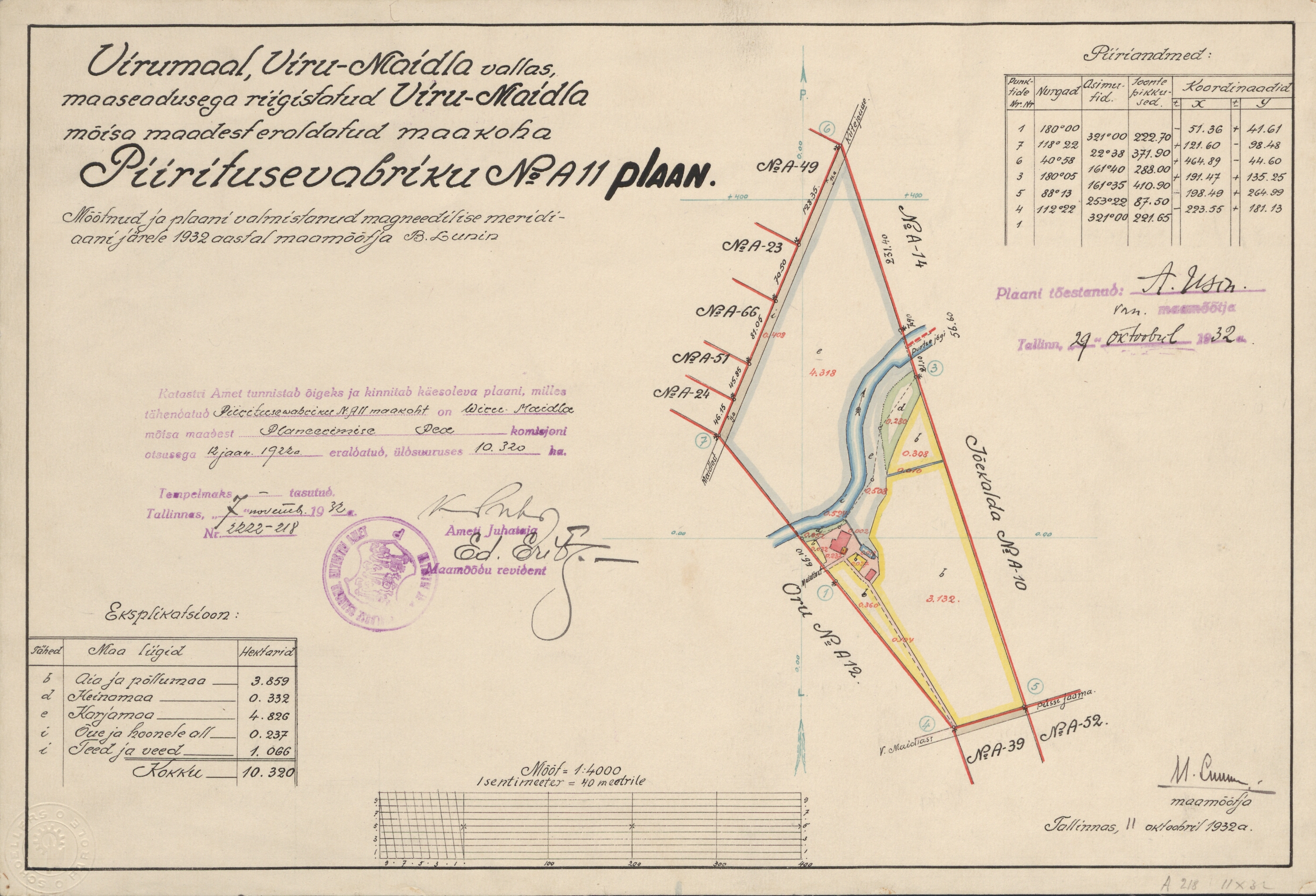
Piiritusevabriku A‑11: the parcel’s precise name in a 1932 document
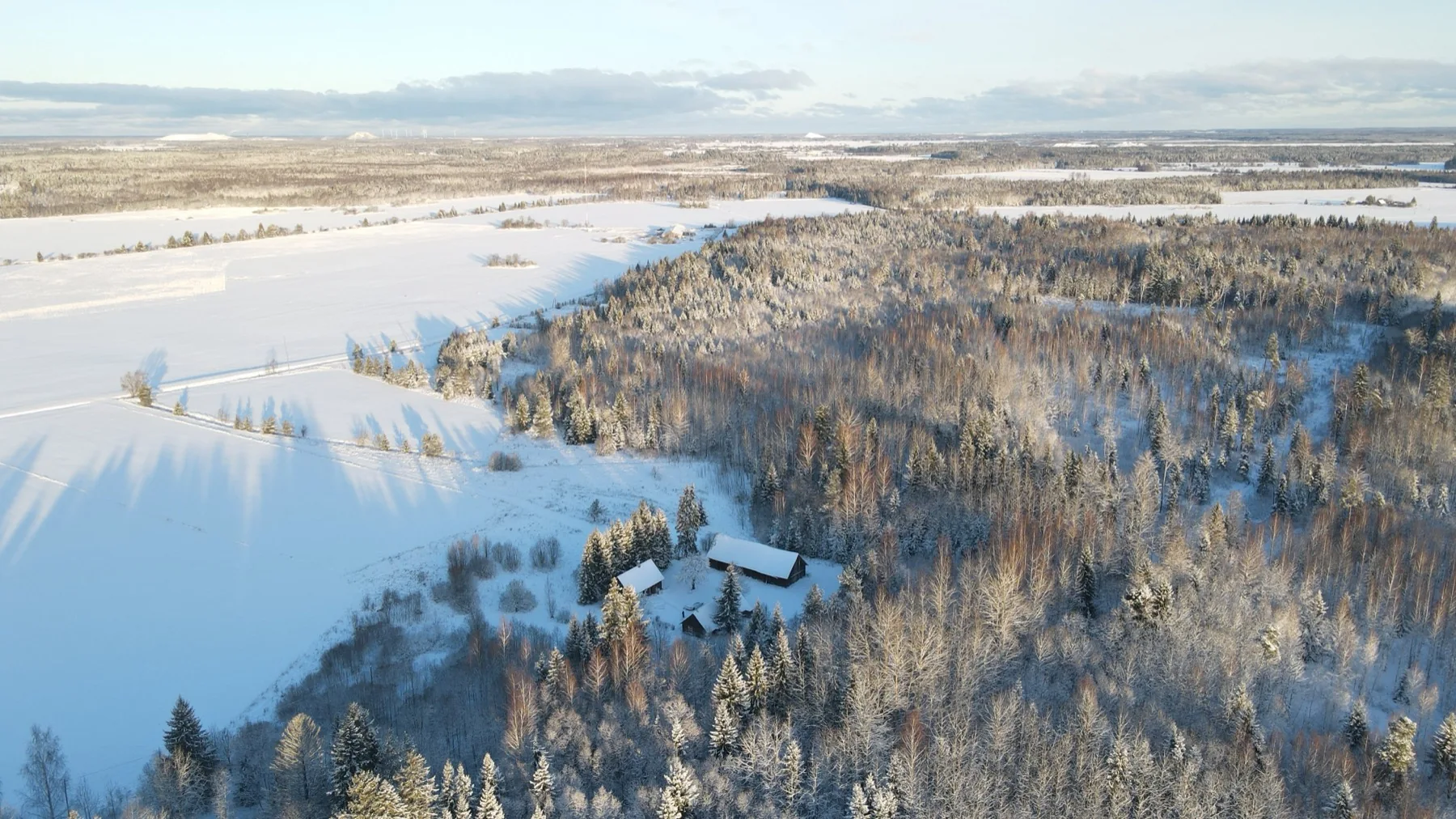
Plan ERA.T-3.22.1281 names Piiritusevabriku nr A‑11, with an area of 10.320 hectares. Four building marks already appear in the farmyard.
This is the most precise historical reference point for the present place. Its archival title also states that the parcel was formed from Viru‑Maidla lands transferred to the state under the Land Act.
A‑11 alone is not enough: Maidla also had another A‑11, Keskvälja, with a different kinnistu number. Every conclusion here therefore applies only to Piiritusevabriku + A‑11 + kinnistu 12526 + the 1932 plan.
The marks on the plan cannot, without a separate survey, identify each present building as the same structure.
A built farmyard across the maps: continuity of place, not a date for every building
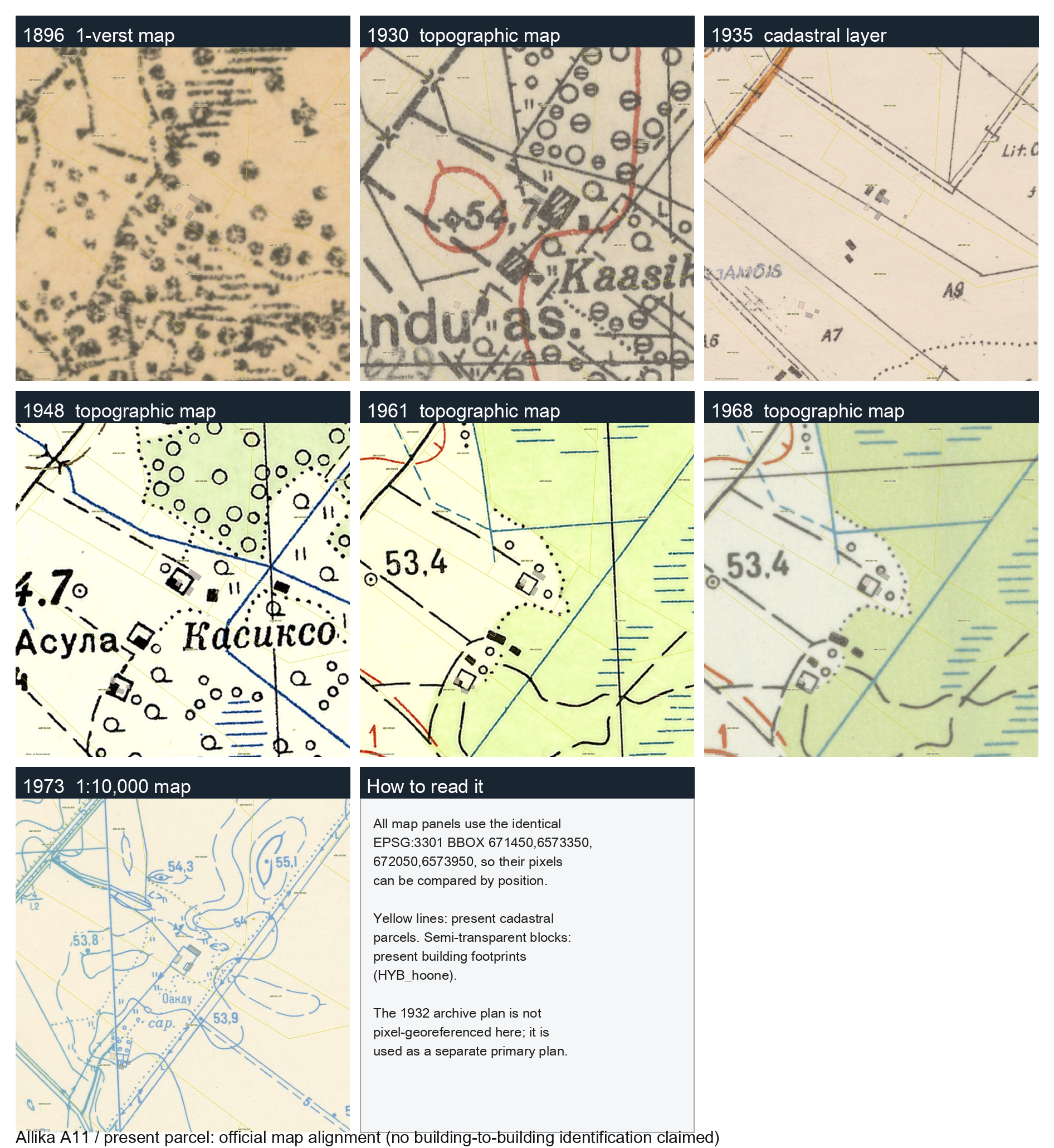
Official maps mark a building at the same point in 1930, 1935, 1948, 1961, 1968 and 1973. This reliably shows a continuous built farmyard.
The earliest inspected 1896 sheet is too small-scale to read this particular farmyard reliably, so it is not used as evidence for a building date or parcel boundary.
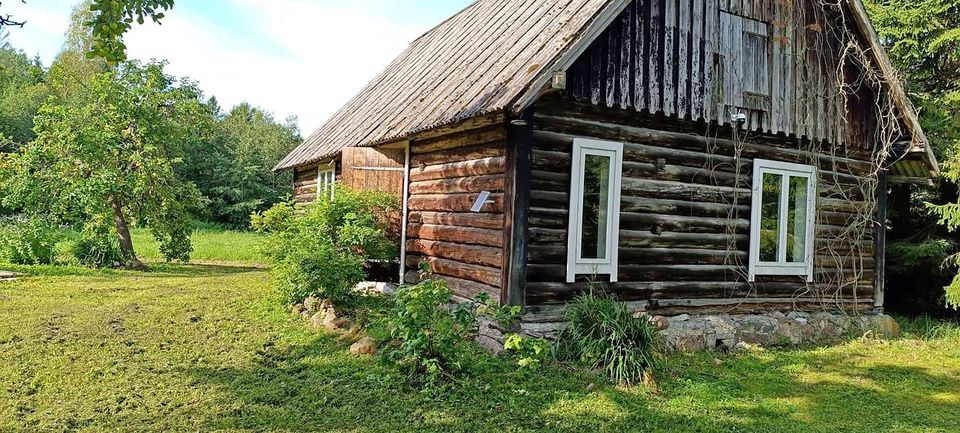
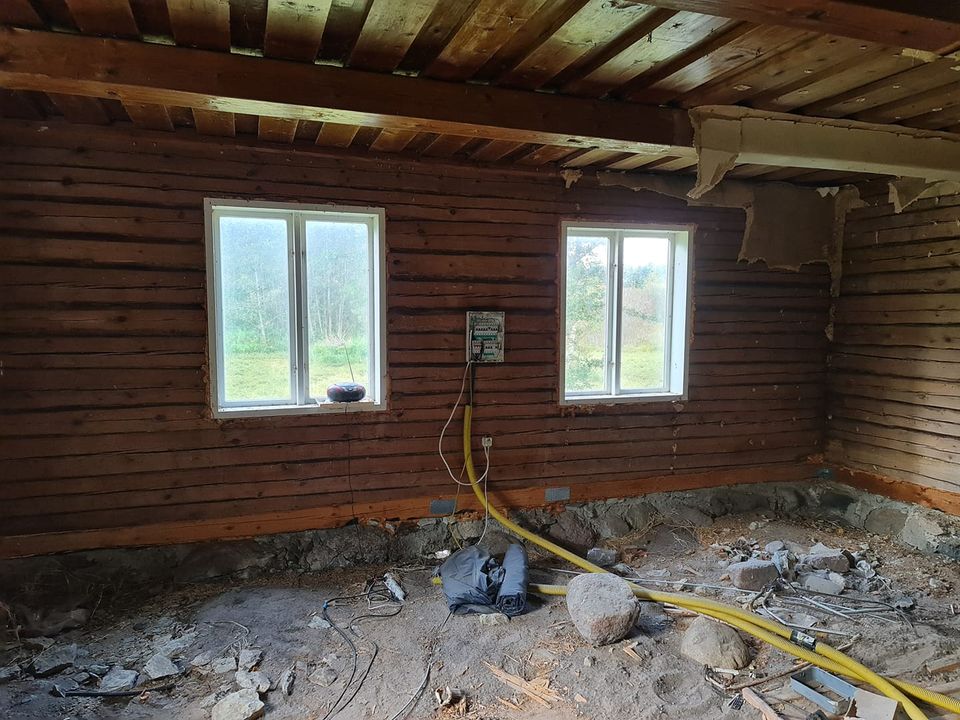
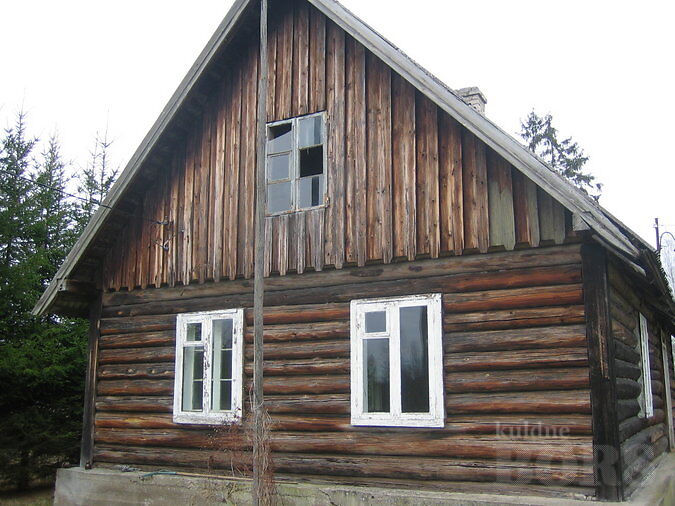
Ehitisregister lists first-use years for several objects: 1923 for a barn-granary, 1924 for the dwelling, 1925 for a stone well and 1980 for a shed. These are not automatically physical construction years: where original documentation is absent, the register can contain an estimated date.
A working hypothesis is that part of the material setting may date to the interwar period. Confirmation needs records that identify individual present structures, not merely the farmyard point.
Oandu, Allika and Piiritusevabriku: where a name ends and evidence begins
Oandu supplies an important setting: in the early eighteenth century the area was associated with Mäetaguse; Oandu asundus formed in the 1920s and village status was fixed in 1977.
This helps us search through changing administrative and local names, but it does not identify an owner or resident of a particular A‑11. In the same way, archival records for Maidla piiritusevabrik are a separate economic line: they do not prove that the distillery stood in the present farmyard.
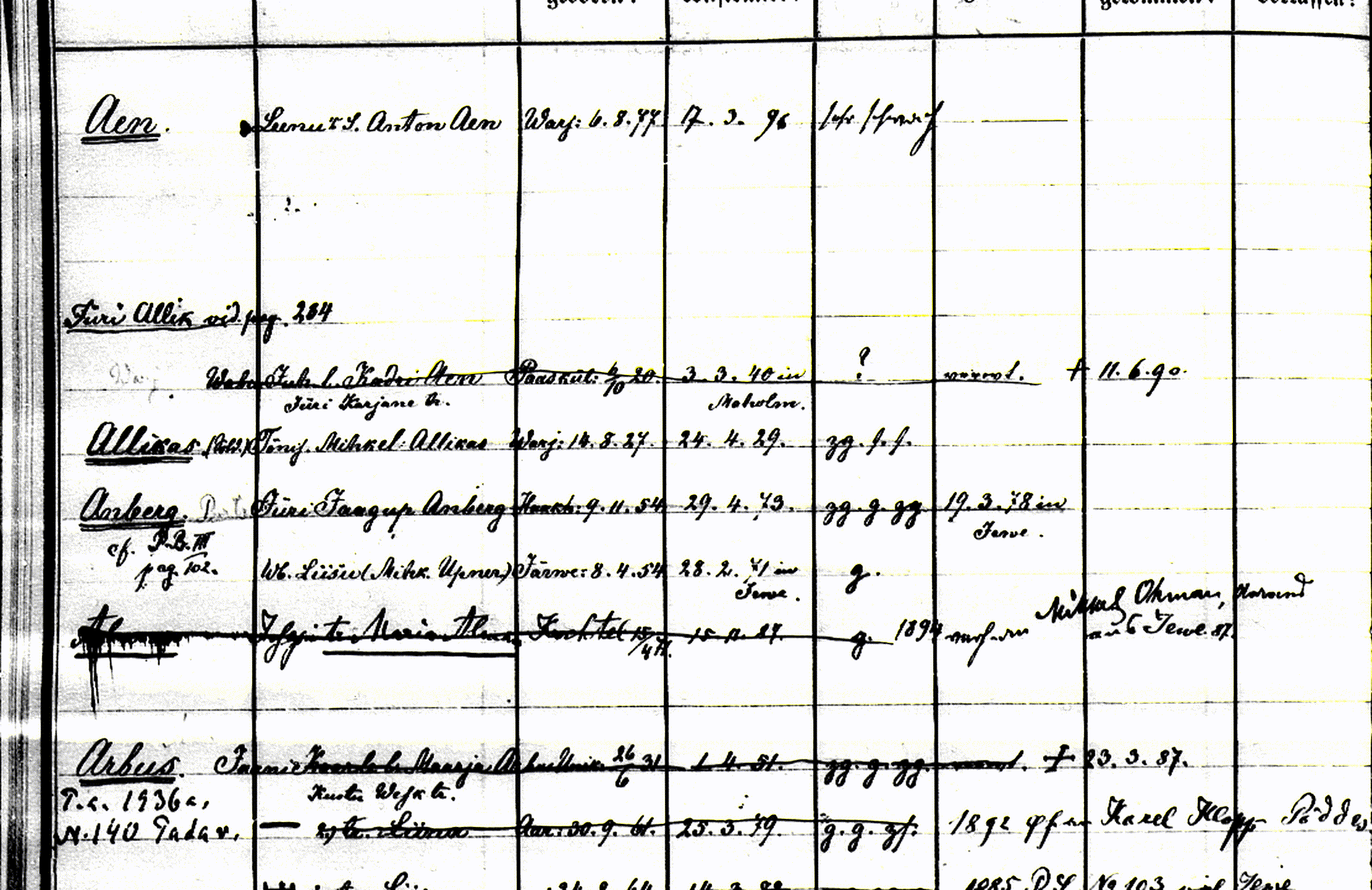
Sources contain homonymous Allika places and separate personal entries. Without a direct link to Oandu, Piiritusevabriku A‑11 or kinnistu 12526, they are not published as this farm’s biography.
That is why Allika’s history remains an open inquiry: new material is added only when we can state both what it establishes and what it does not.
A‑10 beside A‑11: a similar number is not the same story
The 1932 plan shows Piiritusevabriku A‑11 and neighbouring Teekalda A‑10 as separate parcels. Three years later, other plans explicitly name Allika A‑10 / kinnistu 2067.
This is an important, plain correction to the map of the place. The 1932 sheet does not say Allika: beside A‑11 it reads Teekalda A‑10. A‑11 has its own boundary and a farmyard with four building outlines by the Purtse.
Two plans certified on 24 May 1935 name Allika nr. A10 / kinnistu nr. 2067. One adds a strip from Maidla manor land; the other returns a different strip. We can therefore date the documented name Allika A‑10 no later than that day, and see that its boundary was being adjusted.
A shared number does not merge the records. Until a document directly connects Teekalda A‑10, Allika A‑10 and Piiritusevabriku A‑11, the neighbouring parcels remain separate historical lines.
Rahvusarhiiv lists Allika talu nr. 10 and Piiritusevabriku krunt nr. 11 as different archival units, with different identifiers and titles.
Both catalogue cards sit in the same administrative branch of state lease farms: Virumaa, Maidla vald, Maidla mõis. That makes the branch useful for further research, but it does not make the two records one farmyard.
The open cards contain no file pages, boundaries, dates, rights holder or resident. They cannot identify Allika talu nr. 10 as Allika A‑10 / 2067, nor can they show that A‑11 never later received another name.
This does not end the history; it keeps it from a convenient fiction. The three lines remain side by side until a primary record connects them directly.
The basis is the updated Allika–Oandu research report of 28 August 2026. External links lead to catalogues and reference works; terms for republishing archival scans are checked separately.
“Confirmed” means a source speaks directly about the place or object. “Context” helps us understand the locality, but does not replace a link to the parcel. An open question is not a hidden claim.
Do you have a document or family photograph with a precise place caption? Write to us — new material is added only with its provenance and evidential limits stated. support@allikafarm.ee
Allika stories in your inbox
Archive news, family-history resources and ways to help. Joining is optional; every newsletter includes an unsubscribe link.
The form is in Russian. Opening it loads Brevo; your email is submitted only when you send the form. Confirm via email to complete signup. The confirmation email is in English. Privacy · Brevo Privacy