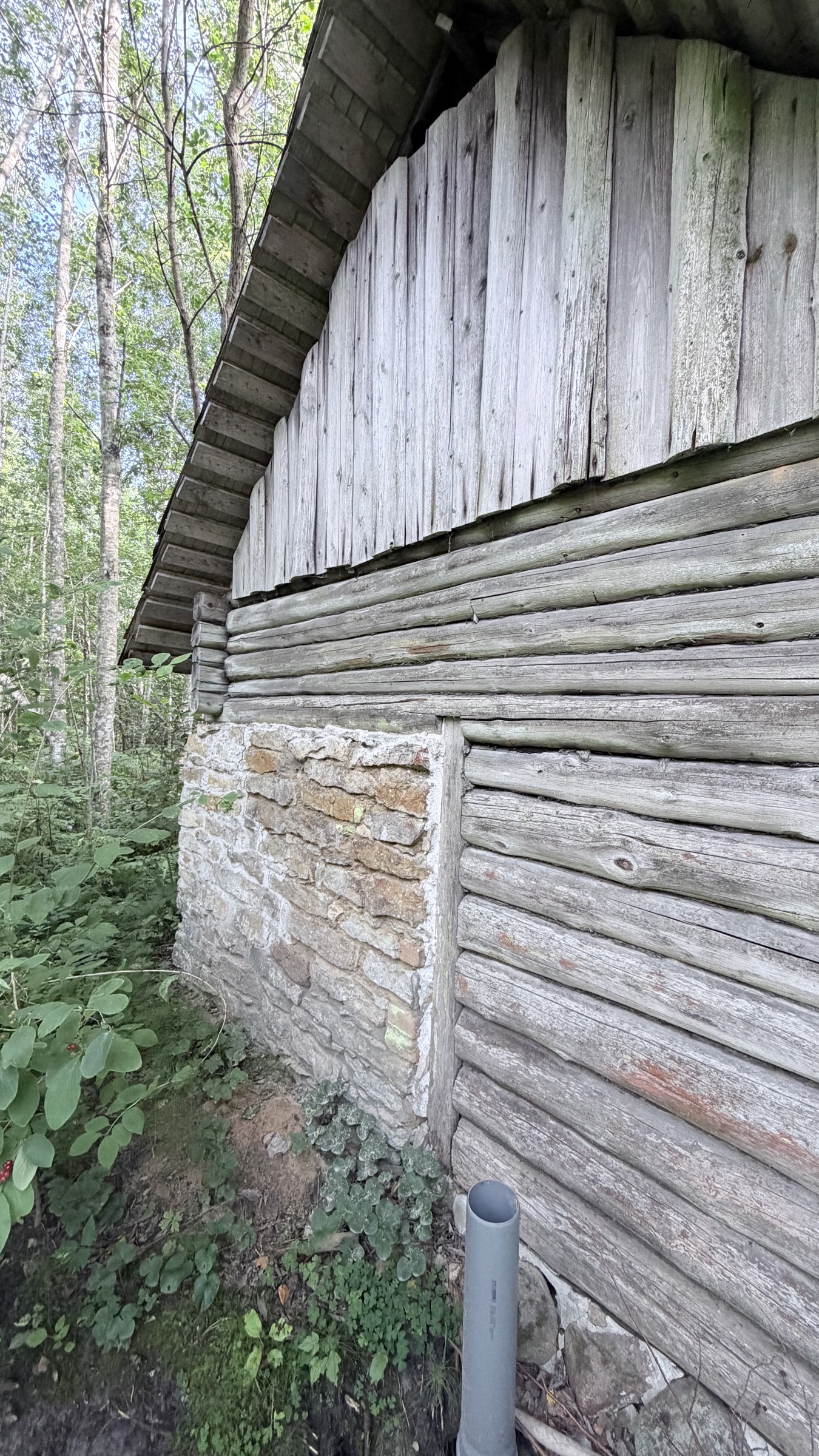
1. Separate the image from its background information
The sauna photograph shows stone masonry, horizontal logs and vertical boarding above them. The identification “Allika sauna” and the date “August 2026” come from our diary caption, not information written on the wall. Keep these two sources of information separate in your record. A month does not justify inventing an exact day.
2. Describe rather than diagnose
A useful description is “a log wall continues beside the masonry section, with vertical boarding above”. “The wall is safe” or “the logs were replaced this summer” is not supported by this photograph alone. Surface colour does not establish a material's age or hidden damage. This exercise teaches documentation, not structural assessment; do not touch or move building details to improve a picture.
3. A comparison example: the greenhouse
The May 2026 greenhouse entry shows a film covering, a frame visible through it and bricks on the ground along the edge. The image does not show the installation date, number of workers or harvest yield. The caption's month dates the diary photograph, not automatically all the work. The sauna and greenhouse are different subjects, not a before-and-after pair.
4. Make a later comparison fair
If you have another permitted photograph of the same subject, record whether viewpoint and framing are comparable. Missing leaves, different lighting or a tighter crop can suggest change without any building work. Describe the specific visible difference, leaving its cause open unless there is a separate work record. Keep the original file and share a separate copy.
5. Create a photograph record
An empty field means something is unknown, not an invitation to guess. For an existing online photograph, record the page address and date viewed. For an old family photograph, ask who took it and where it came from; record an oral recollection with its source, not as something the image itself proves.
Worksheet — copy into your notes
- Photograph identifier or filename: …
- Provenance and page address: …
- Place and basis for its identification: …
- Date precision: day / month / year / unknown
- Visible in the image: …
- Information supplied by caption or recollection: …
- Comparison image and visible difference: …
- Open questions: …
- Creator, rights holder and publication permission: …
6. Share with a description of the rights
When offering material to Allika, start with a description or link. State whether it is a research lead only or also offered for publication, and whose permission you have. Possessing a photograph does not automatically mean owning its copyright. Do not send sensitive personal information; identifiable people or unclear rights require a separate publication review. An image that can be read in an archive is not automatically free to reuse.
Try it yourself
Write two sentences using the greenhouse photograph: one direct observation and one question the image cannot answer. Avoid assuming that the photograph's month is the construction month.
See the reasoning
For example: “There are bricks on the ground along the film covering's edge.” Question: “When was this covering installed?” The first is checkable in the photograph; the second needs additional information about the work. “Volunteers built the greenhouse in May” would combine unverified workers with an unverified work date. A good record leaves both open.
Sources for the example and further reading
- Allika diary: stone and logs at the sauna
- Allika diary: greenhouse in May 2026
- Offering material and participating
Found an error or another source? Send the page address, the disputed claim and a checkable reference to support@allikafarm.ee. Making personal notes does not give permission to republish somebody else's photograph.